Hello again,
I had to, I had to do a part two! So here it goes!
Back to being in Kathmandu and the day of departure. I was relieved I wasn't on the first chopper flights from Kath to Namche Bazaar - those folks had to leave the hotel at around 5am, my flight was scheduled for around 8am, so I was in bed until just before 7. I got up, went to breakfast and sat with Russell, discussing random things. Then he took a phone call and casually told me to be ready, we'd be leaving earlier, shit! I finished my breakfast and raced back to my room to do my last minute packing - whatever I wasn't taking Id leave locked in my suitcase at the Hyatt, and my laptop would be kept at the Himex office.
The day that I went to the Himex office with Woody and Stephan (the western guides) we were taken into a shed out back to get suited and booted - let me just say, there was no shortage of gear, and I had no qualms about what I was taking up to wear. There were sealed drums in the shed that each had full kit in them, sorted by size - hats, gloves, socks, trousers, jackets, fleeces and big outer layer down jackets, sleeping bags, day packs.. I felt like I grabbed at least one of everything! This was all Toread gear, and something I loved about their gear was that their outer jackets all have removable liners - which were either down or windproof. What a great system! I chopped and changed for the duration of our stay at EBC.
We were loaded into vans to go to the airport. Once there, we were weighed in and then it was about a ten minute drive to get to the helo pads. The weigh in was awesome, because we had to keep our day packs on to show the combined weight, and I saw with my own eyes, the effects of the altitude just from being in Kathamandu! (1800m) I was down around 8kg! Awesome! Let's get chocolate and celebrate!
We were the final 2 groups in two choppers, along with boxes and cargo, and off we went. It was a 45 minute flight to Namche Bazaar from Kathmandu - stunning is putting it mildly! Iv been on so many helicopter flights, here I was doing it for work again and it was just amazing. I sat in the back behind the pilot, the Nepalese expedition doctor was next to me, and trekker Sam was in the front. We hit a bird on the way there, and that caused a bit of a shudder, through me as well as the chopper, we saw Lukla out my side window and the infamous runway (second most dangerous in the world behind one in Afghanistan, apparently), and mountain tops that took your breath away. Iv seen the alps in France, Italy, Switzerland etc and we have alps in New Zealand, but Nepal is something else.


We stayed on the heli pad until the two choppers left again, and then walked down into the village and to our lodge. Theres a lot of buying options in Namche, I dont know what its like further down the valley but you could forget almost anything for your trek and be able to buy it here, but you will notice the big increase in price in comparison with Kathamandu, and it gets more expensive the higher you go - but for trekking relevant gear? Namche is like the last chance saloon - trekking poles, packs, clothing, sleeping bags plus the food stuffs that are the norm on the walk in - pringles and toblerone, snickers... they're everywhere, but by the time we got to Gorakshep, the toblerones were almost $20AUD each and they were the small ones, not the jumbo size like you find in duty free at airports! Let me just say this, as a self-proclaimed dark-chocoholic, EBC is where I gave up the addiction - it happened naturally because it simply wasn't available. However, our Nepali dude who walked trekkers in and out, well he managed to find me two blocks of dark dark chocolate in Namche Bazaar after I begged him to at least try - it is there, despite me never finding any! Seek (and then seek some more) and ye shall find, next timeI Id pack a heap of my own supply if Im going back!
Theres a lot of little shops to look at in NB, plus cafes, bars etc. It had a really nice feel to it, I felt like I could go back there and chill for a longer stay, and it was definitely the biggest with the most to offer, out of all the villages we stayed at.


NB is where I started a new habit - I invented 'cofftea'. The sherpa tea was milky and sweet, and milk and sugar are two things I never, ever add to my tea, but I started drinking it, and lessened the diabetic punch by adding some of the coffee, which wasn't sweet. Hey, it wasn't bad even though the thought of it seemed to disgust others and I couldn't convert anyone! I kept that habit for the trek in - one cup with twice the fun!
Oh, NB also has the worlds highest dental clinic! Is this true? Not sure, but theres definitely a dental clinic there, it was closed otherwise Id have had a nosy - oh and, theres ATMs there as well. Those are harder to come by the higher you go, that may have been the last one, I cant quite remember - hint, take enough cash but remember nothing comes for cheap!
Our Nepalese sim cards worked amazingly here, and also at Khumjung, and then after that, there were patches here and there during the walk in, otherwise it was a case of welcome to the worlds most expensive wifi, that doesn't always work as advertised. Apparently Gorakshep is the last place for cell coverage, and the towers definitely there, I stood right next to it trying to send some messages, but to no avail - next option, paying for wifi at EBC. It worked well, and was set up and ready to use by about day 4 - at $20 USD per GB. What are the options, to go without, or pay that amount - there was no way I was going to go without!
I remember skyping my parents one clear, beautiful sunny morning - they had a perfect view of the top of Everest - they've had phone calls from me from Antarctica, the Arctic, the Great Wall in China... god knows where else, I had to do that skype call from EBC!
Khumjung village is home to all the sherpa we had on the expedition. Russell told me Phurba does that side of business - I didn't spend a lot of time with our sherpa, they were busy with trips up and down the mountains - both Pumori and Everest, they dined in their own tent, and kind of kept to themselves, but over time, I did get to know them - amazing bunch of guys and so many summits amongst them, absolutely mind blowing. And it's all taken in their stride. Actually we lost one after the Pumori summit. He was young, and Im not sure he'd been up Everest yet either, but the altitude got to him and he had to head down again, makes you realise how altitude doesn't care where you're from, how old you are, what gear you have, what your dreams are, how much money you have or have spent on your dreams and goals - you will meet with altitude when you're at altitude, and then your truth will show itself.


I didn't know that going in, I thought it was a term to do with the guys who help climbers up Everest, I mean how could I know, Id never investigated it. Im from New Zealand, of course we all know Sir Ed and Tenzing Norgay.. Actually, Sir Ed used to spend a lot of time in Khumjung village, and a walk to the local school, a stones throw from Phurbas lodge, has a dedicatory bust to our hero. He opened that particular school. I also found out from Phurba, that Namche Bazaar is the last stop for yaks, they don't go any lower because drinking stream waters lower down kills them. Theres something in the water that reacts with them - he's got plenty of yaks, Im not going to doubt him. (The average yak is worth $600-800 USD)
The yaks are big, but docile - and you'll see plenty of them on the walk in. Russell kept reminding us to always be uphill from yaks, or the odd horse and donkey that are walking the trail too, as they're loaded up with wide loads and can swing around any time so for safety, step upside. A week into our stay at EBC, I 'heard' that the first death of the season was from someone stepping aside to let a horse past, but they didn't go up, they stood on the edge of the trail, and ended up being knocked over by the horse and falling to their death. That is all I know of this story.


The lodges on the walk in are all kind of similar, except I heard Gorakshep is particularly 'nasty' - we didn't stay there, we stayed at Lobuche which is the village beforehand, instead. We did stop for tea at Gorakshep though, and if the toilet I used was anything to go by then yes, Id agree that we made the right decision not to stay there, however for trekkers there's little choice. A permit for trekkers enables them to walk to the pile of rocks and prayer flags that mark EBC. Technically, they're not permitted past that point into base camp, but you see them wandering through base camp like nobodies watching and nobody is maybe they need to start. Theres hundreds of dollars worth of gear up there in the camps, there's the privacy factor plus illness is a real threat, so nobody wants just anyone wandering through their camps, and you'd appreciate that point of view if you were there. . Hows this though, just before we left I went for a morning walk and there was a tent pitched right near the official marking of EBC, and as I got closer the sleepy-eyed tenant emerged, stretching and yawning - happy to be there! I had to smile to myself, his blatant flouting of rules and gumption to just set up camp and stay, I do believe authorities were told though and he was moved along. (I didn't grass!)


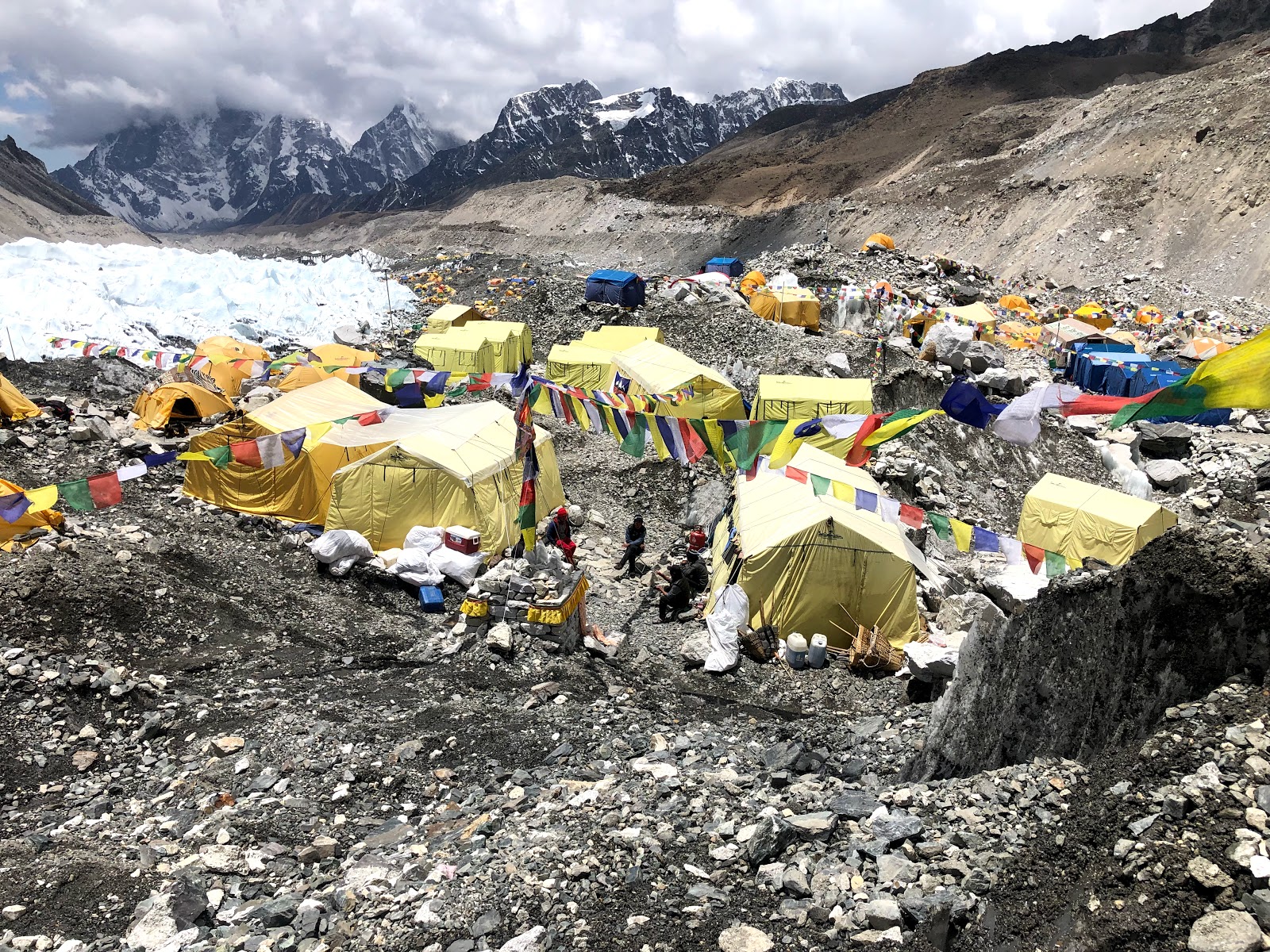
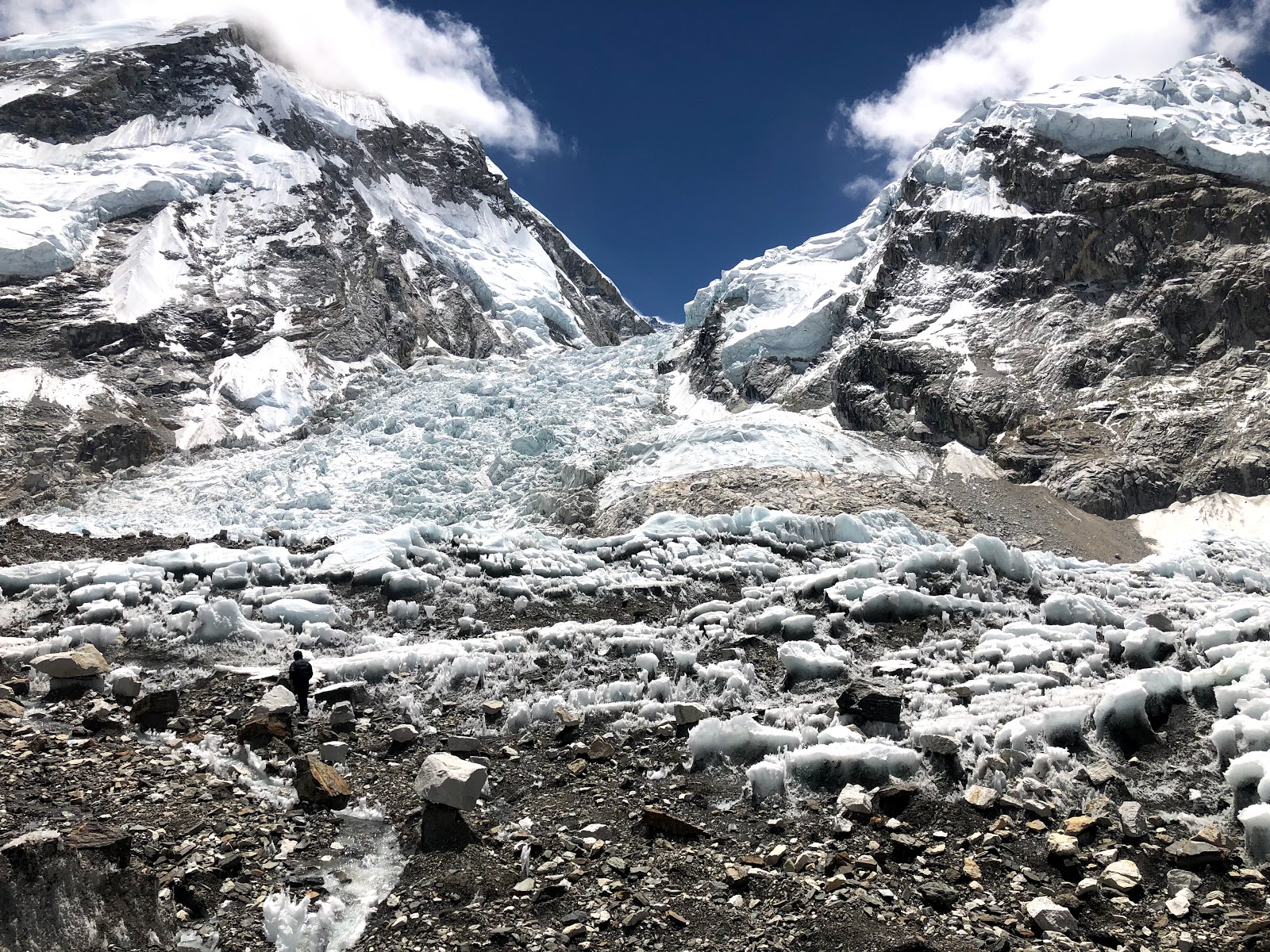
Getting the first views of EBC made me well up, amazing to see - lots of yellow tents dotted amongst the rocky terrain, the Khumbu icefall in the background (what you could see of it, which is the lower part) and Everests mighty peak, as long as you're in the right place, showing itself above everything else. Once you follow the path down into base camp, the path curves to the left, towards the Khumbu and every company sets up somewhere along there,]whereas Russell goes to the right to set up camp and this is what gave us a clear view of the peak of Everest. I used to look at it every day, retain and appreciate the image, try to save it to memory because it's just so incredible to witness.
I remember one trekker on the walk in, sunning himself on a big rock along the pathway before you drop down into base camp, informing me, Russell and the female client with us, where exactly Everest was and look! there's the peak!.. Funny, he clearly had no idea who Russell is, as opposed to the people that do know and ask him for selfies and autographs along the way. A similar thing happened early one morning when Phurba and I went for a walk up the path out of EBC, to sit on big rocks at the top, looking down over base camp and the valley - and to the few trekkers walking in, I could hear Phurba acknowledging each one as we passed them, most of whom didn't even bother replying.. Wow, I thought, if only they knew who they were walking past...
Every day for the walk in was sunny and clear. I got used to wearing trekking pants (my own Lulu Lemon ones), trainers or the lightweight boots I bought for cheap in Kathmandu, and a tshirt with a light down jacket over top, and a rain layer over that, that acted as wind protection also. Hats and gloves when necessary. The lodges, well I took thongs to flop about in inside, and that was a mistake as they didn't work well with my socks - thongs and socks is standard winter footwear in NZ, how could I go wrong? Well, the two just didn't want to work together, end of. Its not like I was walking around a lot, I could shuffle from room to food to bathroom etc - but next time, Id take something more suitable for sure!
Heating in the lodges is a fireplace, and it has no impact on the rooms. They were cold! And the toilets further up the valley got more and more basic, like no flushing - you have to empty jugs of water into the bowl to flush your stuff. Also, you need your own toilet paper. It is available to buy, but like anything else, the price will keep rising the higher you go - take your own. Why the price hike ? Because the lodge goods get walked in too, the higher the valley, the longer the walk - the bigger the price.


We used to start our trekking after breakfast, at 8.30am. Worked well, and for the duration I was usually one of the first up - habits, I cant lie in bed when I know its get up time soon.
Our routine was established - which included getting your trekking gear sorted - carry the least, of the things you need - solar chargers, water, phone, spare jacket etc, and the other bag with toiletries, sleeping bag etc put outside so it can be loaded on the waiting yaks. I can vouch for this, whatever you carry, even the bare minimum, it will start to feel heavier the higher you go! Another thing I noticed was I wasn't getting hungry often, Id eat, but that was because it was there. This is something that happens when folk summit, their appetites on of the first thing to go - the fun part is knowing you should eat, so you do eat but what you do eat wont go to your hips - moment on the lips, and never on the hips!
Garlic soup is common in the valley, and I recently learned that garlic is good for altitude, well I say 'good for altitude' - how? I was never told the science, and though its tasty, warming and bloody good to eat after walking all day, well I still suffered from the altitude. Hot chips are a staple up the valley, really common to be served at lunch time. And breakfasts always had an egg option, porridge - oat or rice, toast etc. Like what you'd find in the west. And dinner could be anything but staples are potatoes, wintery vegetables (its cold after all) and a protein option.
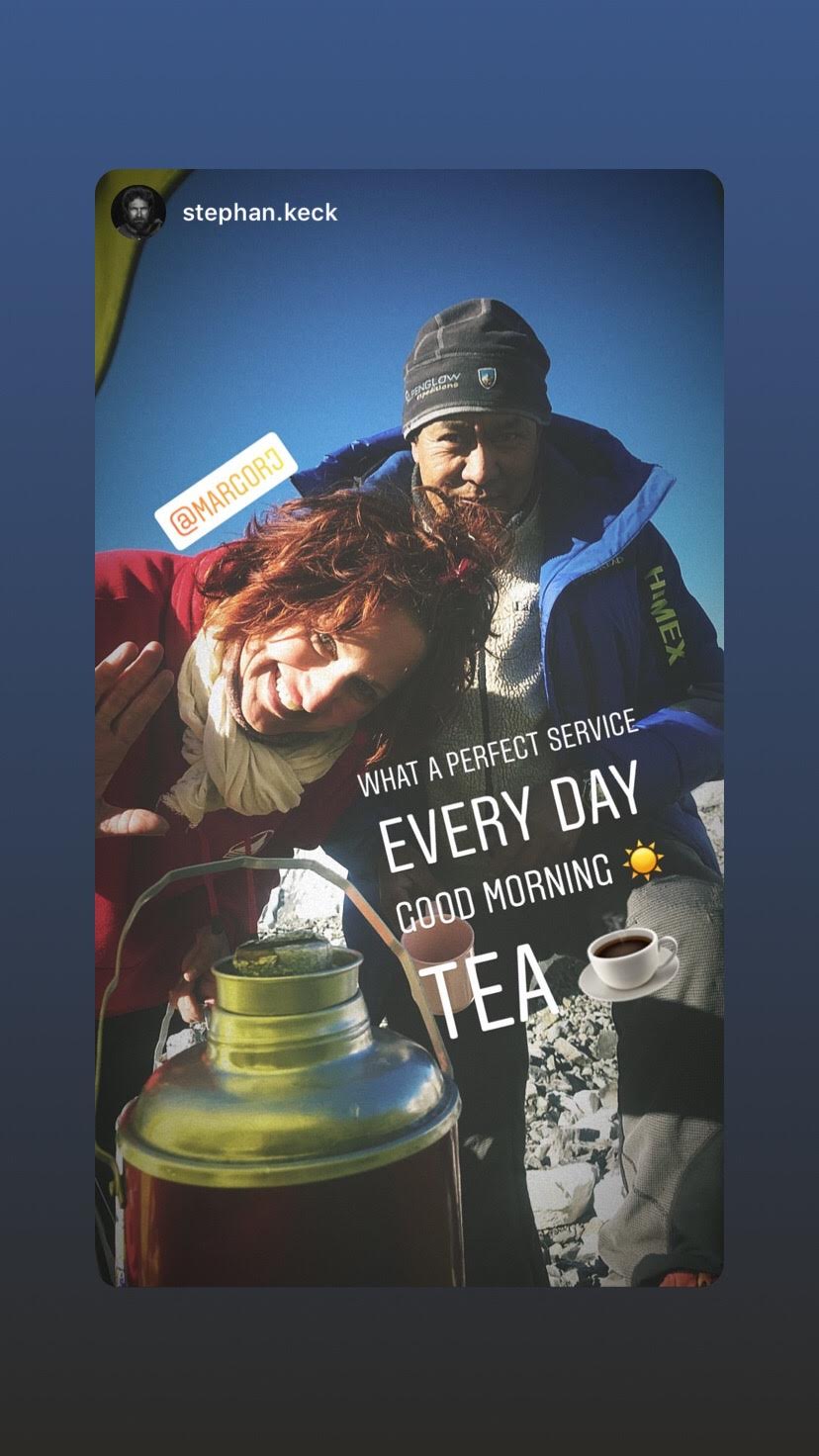
I bought a Nalgene bottle for the trip, in Kathamndu. The guy in the shop told me it was a real one,(course it is) gave me an amazing price, a bit too amazing for a real one, and a few days into my trip, it shattered all over the floor when it fell from my bed in one of the lodges. Thankfully, the general store over the road sold them so to be safe, I bought two, and they were very expensive but, the best choice ever. For 95% of the time at EBC, I took two to bed with me every night, filled with hot water. As the season went on, the water would keep a bit of heat to it, as opposed to being freezing cold by morning or frozen solid especially if it ended up out of your sleeping bag. Your pee will freeze too, either into one block or partly. I used to detest waking up and having to pee, its cold and so uninviting, but I had a she-pee which definitely makes it easier and I would count down to facing the cold and go into my special bottle. Mine was a 2L bottle that I got in Kathmandu - a pringles tube makes a good pee container too, but it wont last too many uses. Defrosting my pee was part of my morning routine - Id tuck it away amongst the rocks outside my tent, so I could empty it later on in the day. Another part of the morning routine that Russell has is kitchen staff taking tea - milk or black - to the tent occupants in the mornings. Hot towels are also handed out, not only do they feel nice to use on face and hands, but they're also playing a role in camp hygiene. Good thinking Russ!

I took my ipad as I have so many books on it, and a few movies. I used to get into bed and watch a movie, or, play card games on my phone. Sleep felt hit and miss and as the season wore on, the sun was rising so early that Id wake with it and it was barely 5am. I tried an eye mask which made a difference, otherwise, there's helicopters some days before 6am, during a full moon the light is so incredibly bright and of course that old trusty - altitude - all of which can affect your sleep. About 3 weeks into my stay I started getting cheyne-stokes breathing at night. Since Iv left, I was told by someone that it wasn't cheyne-stokes breathing, so was it or not? This is how google defines it:
Cheyne–Stokes respiration is an abnormal pattern of breathing characterized by progressively deeper, and sometimes faster, breathing followed by a gradual decrease that results in a temporary stop in breathing called an apnea. The pattern repeats, with each cycle usually taking 30 seconds to 2 minutes.
I'd wake, traumatically, because I was out of breath - Id sit bolt upright in bed, desperate to breathe, and nothing I could do would make this feeling go away. I wondered if it was a mix of feeling like asthma, shortness of breath, emphysema, anxiety - what a mix, right? I don't know what emphysema feels like but my point was this, I did feel panicked and uncomfortable, I tried doing deep breathing / pranayama, but I had to just wait it out, that was what worked.
I asked Phurba for two sleeping bags, which I got, yay! And during the stay, I managed to acquire a second sleeping mattress, so I made a double bed for myself, leaving a strip down the side of it between mattress and tent, for my needs - water bottle, pee bottle, clothes etc. I feel like I slept better with a second mattress too, and despite two sleeping bags plus layers and two hot water bottles, I always the night time cold. I never slept with a layer of clothing on my legs, I never do, but next year, I will take a layer for this. On top, Id have a thermal top or long sleeve cotton tee, down layers (one or two) and my big, woolly long neck jumper that I bought in Kathamandu. It was heavenly, Im wearing that same jumper as Im typing this now. I was told it was yaks wool, Iv since been told its not - but I bartered the woman in the shop for two days over this jumper. I did get her down in price and I was so pleased I had it with me up the hill - it became a yoga jumper too, given I was practising yoga in the white pod in an average of -8, why not!


During the days, sometimes I could get down to a t-shirt layer, but that was very rare. More usual was, trainers on the feet, light weight pants and 2-3 layers on top. Early morning and from afternoon onwards, were the heavier / bigger layers. But by day, it could be a hoodie only, always a cotton buff around my neck (I only had thicker ones with me but noticed the kitchen staff wearing the cotton ones, so asked two of our climbing sherpa who had to go to Gorakshep one day, early in the stay, to pick me up two, and they did. Best things ever! Early season, Id layer those too - a thin cotton one, with the thicker one over the top. I don't like hats, and I ditched wearing one early on. I could wear a neck buff around my head also, so if I needed to, I did, otherwise i went bare-headed. Not so bad when you're not out in the elements, because like in Antarctica and the Arctic, it's not necessarily freezing, but a wind coming up or down a valley, or across snowy flats etc, that is cold.
I remember one evening feeling particularly cold, pre dinner, it was bitterly cold. I checked the temperature on my iphone, it was -10. During the last week, when folk were summiting, the mornings were in the 30s, believe it or not. Russell had a thermometer outside his tent and I couldn't believe it when I saw the temp was in the 30s. Let's put it into some sort of perspective though, were at 5500m, clear skies, surrounded by massive, snowy mountains - it didn't feel 'hot'. Nice to sit in the sun, drink your coffee and watch the summit activity in though.


So outside the kitchen window, looking up valley and over base camp, we had stellar views of Changtse at 7583m and officially in Tibet, Lingten on the left, with its razor sharp edges and perfectly perfect slopes at 6749m and Pumori 7161 on the left. The bulk of the right hand side of valley of base camp is Nuptse at 7861m - and it was Nuptse that used to throw off some amazing avalanches. Some of the night time ones were so big, the noise would wake you up and I remember one night an avalanche sprayed across the valley and sprinkled snowy dust on our tents. The biggest one I actually saw was one afternoon, and a big cloud settled over the valley floor. During the big earthquake in 2015, it was Pumori that had the big avalanche that resulted in wiping out most of base camp. When you see it you can easily appreciate how those that perished had no time to escape let alone anywhere safe to go.
Camp gets busy with helicopters as the season kicks into gear, but when summit is officially open and people can finally head off on their mission, the air traffic is really busy. It wasn't unusual to hear them coming before 6am, and there was a helo pad 5 minutes walk from our camp, so if they were landing at that pad, they'd fly by so closely to us. There were 3 or 4 helo pads across base camp, and when the choppers needed to head up the mountain, they'd fly into the valley and then start spiralling upwards before disappearing from view up the Khumbu Icefall to Everest. At camp two they can land but not at camp 3, which sits at 7470m, so any aid is given via a long line from the chopper - body retrieval, both alive and dead. Either hangs below the chopper until they can land lower down, and yes, we did see bodies being flown out - alive and dead. The clients told me camp 2 was particularly busy, there were choppers non-stop.


And the food! My role was to assist Russells Nepalese cook Ganu. I met Ganu on the walk in, he was helping serve our food at the lodges, before shooting ahead a few days earlier to get to base camp. He wasn't much older than me and we were rock solid - lots of laughs, lots of ideas, creating and helping each other. It wasn't his first rodeo, he's done quite a lot of expeditions with Russ now, so he was great to learn from also. I was happy to take a back seat and work with him, and I soon learned his menu, how he worked and the ingredients we had. Actually, it was a fairly basic set up and we had amazing food coming out.
Ganu has mastered the art of pizza at altitude - it was a process that involved frying, steaming and baking, he tended to cook certain proteins like chicken, twice - once in a fryer and then add it to the finishing dish ie curry or the likes. I soon picked up how easily he worked on his own, so i filled in any gaps for him, and we brain-stormed our menu ideas together etc. We would always go to our 'freezer' buckets after breakfast and menu plan from there - which proteins did we want to use, what inspired us. Normally, Id have a menu plan for a week, but this system was fine also. Given our situation, it wasn't like we could allow for much prep etc, so we had to work on the fly.
During my first week, Russell came and asked me to make scones, it was a small test for me, and I failed.. Id written out a heap of recipes before going, and I couldnt find my trusty Edmonds scone recipe, so used another one I had, that contained eggs of all things.. they were flat and dense, BUT, the feedback was amazing from those who ate them. I never had a scone fail again. Another day he asked me to make shortbread, so I did and it was perfect. He said it was to take up to the IMG camp when he went to visit their big boss - and the feedback got back to me fairly quickly. Not only Greg ate it but it made its way to sherpa and helo pilots. Lol, nothing like food to connect people, right?
Our client menu was western, we had duck breasts, lamb racks, beef fillet, salmon, chicken etc, the usual complex carbs like rice, potatoes and pasta and fresh veges of the long lasting t like type like cabbage, onion, potatoes, carrots.. enough to make some nice salads or vegetable options and to keep things green and interesting. As it got warmer, salads at lunch time grew increasingly popular, to get that raw vegetable hit in general.


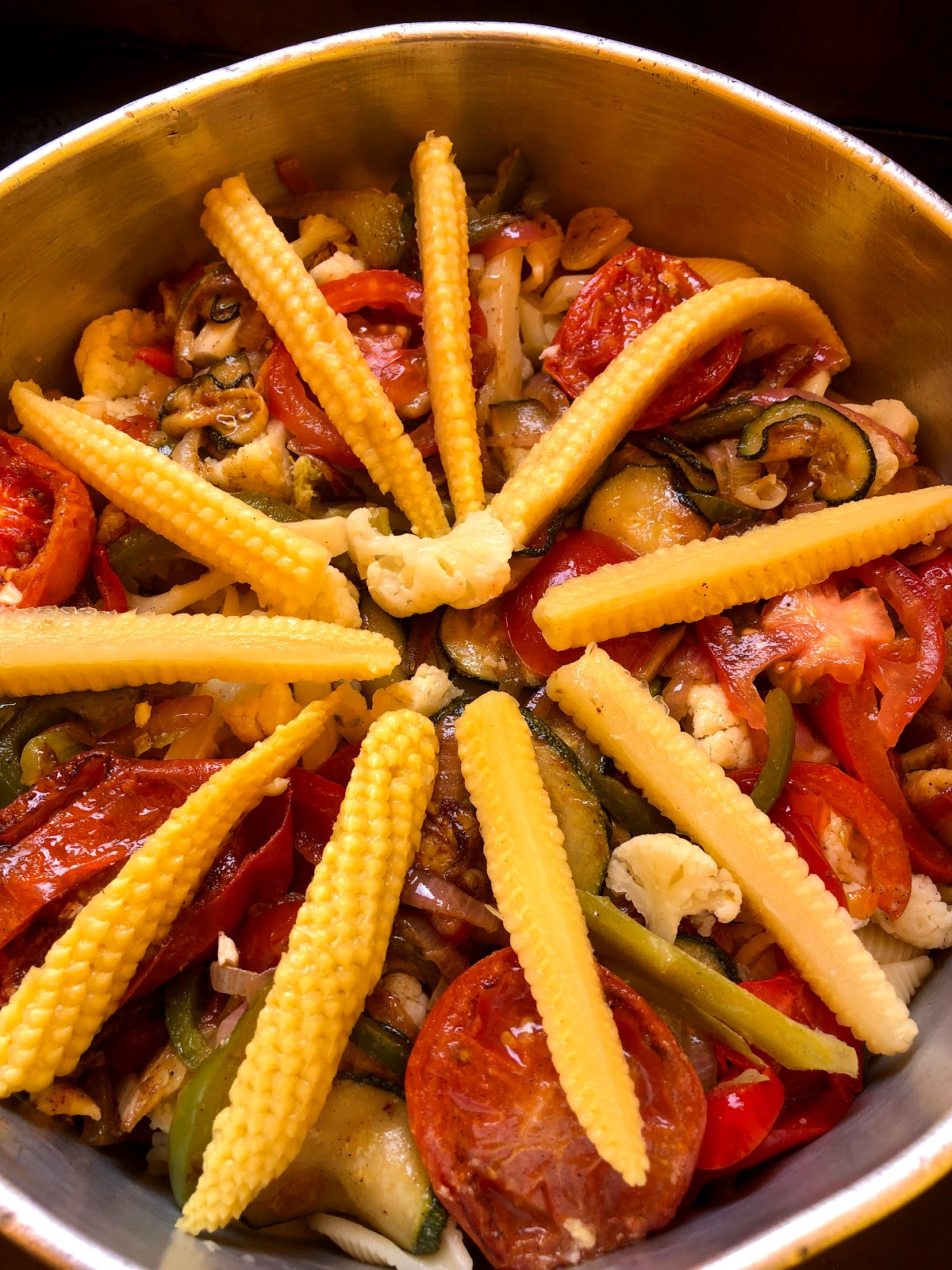


The yellow tinge on the food photos is because the tent we cooked in was ... yellow! For every meal, the dinner tables would be set in the white pod and we'd then do course by course. Id sit and eat with the clients and western staff, and then work by carrying dishes out and bringing the next ones in etc. We had silver dishes with lids for keeping the food warm during service and real plates and cutlery. I heard some horror stories about how other companies do things, but given the budget differences, thats the sort of thing where you see the difference in - food. I made Anzac biscuits on Anzac day, an eggs benedict breakfast after the Pumori summit, and would help Ganu with menu ideas - its always nicer to have someone to bounce ideas off of. We used pressure cookers for the heavy duty boiling and with the rice, Ganu could tell when it was ready purely by scooping up handfuls of the steam that came out of the pressure cooker as it cooked. I never did work out what the smell was to tell him when it was done.
Our clients also got freshly prepared food to take with them up the mountain. I remember when it came time for the Pumori summit, we were flat out getting meals ready because the team would be leaving early the next day - cooked, bagged and tagged for clients and staff to take. This also brought the first taste of altitude with it - a lot of the food came back, they told me they just couldn't eat when they were up there. Same thing happened with Everest too. You'd think the extreme exercise and freezing cold temps would drive you to eat, but apparently not, not in those altitudes.
We always had a huge pot of water on the gas in the kitchen to sanitise it for use - the kitchen porters collected our camp water from a lake a few minutes from camp. I never did see exactly where they got it from but the water containers they had to fill were around 40 litres each. They were big, blue containers and they'd carry them loaded with water, via a strap around their forehead with the water container sitting flat against their back. This was then unloaded into a big blue drum in the kitchen, we had 3 of those, and then used to boil for drinking / cooking water. I got used to drinking hot / very warm water from my water bottles, something Iv never been into before, but it became the norm at EBC. Its much easier to drink more water when it's warmer, and it was the same for the walk in - fill your bottles with hot water at the lodge because its going to get cold on the way in and you must keep drinking.
Camp two on Everest is a home away from Base Camp for all the companies climbing - Russ has another good set up there too, with a sherpa cook to do the food and camp comforts for the sherpa and clients. We also prepped food to go up to camp two, I can say people have eaten my food in Antarctica and the Arctic, I wish I could say my food was eaten on top of Everest also, but I don't actually know that. Sounds like camp 4 was more noodle based with a hot drink and then get the hell out of your tent and get up to the summit before heading back down again.
I used to air out my bedding every few days. The sleeping bags definitely but the mattresses used to get wet underneath them, so every few days it was mandatory. I used wet wipes to wipe the floor of my tent. Twice I found spider carcasses on my tent on the floor - black spiders, like Id never have expected to see at base camp. What the hell are spiders doing up there? We had flies as well, which I guess the spiders eat, and one day, dogs! I want to call them street dogs but not at base camp beause there are no streets! There was five of them, sniffing around amongst the tents and then they were gone again.
Wet wipes are your friend at EBC. But they will freeze at night time at the start of the season, and they take a long time to thaw out. The extra packets I had that got yakked in to EBC were like packets of bricks. Also girls, take note, your period can do crazy things, like come early or unexpectedly, so be prepared!
So of all the reports I heard about how filthy EBC is, I can confirm - fake news! The odd small piece of litter here and there, that was it. Camp 4? Different story apparently, and camp 2? I heard theres a lot of 'stuff' there, but thats a statement that needs context and perspective. Remember the earthquake in 2015? Yeah so, people had to drop their stuff and run, literally, and get out of the valley - the whole climbing season was canned. There'd be no company in their right mind happy to leave tents, cookers etc behind, thats ridiculous, safety first! Shit happens. So there are still remnants of that disaster there, otherwise, camp 2 consists of companies leaving their necessary items there, buried for most of the year, to resurface and be set up during summit season. This saves sherpa carrying things up and down through the notoriously dangerous Khumbu icefall, so its a safety priority also.
Theres a Nepali group at EBC called the SPCC - Sagarmatha Pollution Control Committee - who are responsible for keeping EBC clean. When we had rubbish to be taken out, we'd radio them and they'd come to collect it. The bags are weighed, Russell is charged and then porters carry it out. What goes up, must come down - the poo bucket was no exception. It was around $2USD per kg, I was told, though I never fact checked that, same with goods coming in, I heard it was up to $6 USD per kg, but again, Id need it confirmed. Its not free though, and it's all part of the expense of running an expedition there.
Theres around 1000 people at base camp, spread out with around many different camps / companies, incredible really. Im not sure what I was expecting but it wasn't that - this is a big business.


Theres also an ER tent at EBC with full-time medical staff. The bigger expeditions will have their own doctors, like we did, but for everyone else, there's the ER tent, with a connection to the Lukla hospital, or Kathamandu for the serious cases. I was told that to see a doctor at the ER tents is $100USD and that anything else is charged extra on top of that. The doctor from another western camp told me there was a man staying in a camp behind her, that had black, frost bitten finger tips and he was still refusing help. Im not sure why, she wasn't either, maybe he had decided it was too late for help so he'd deal with amputations when he got back to Kathmandu or sea level. You can never be exactly sure of what goes through someones head at times and you start to see how bonkers Everest can be, or get a feel for it, when you hear the horror stories of what your guys saw when they went up and camp back down again, let alone what goes on in Base Camp. Most of it seems to be because people have the money to climb, but not the experience. They die, they suffer, they take ages to climb and hold up everyone else behind them, putting countless other lives at risk.
This is also where budget comes in, lets not forget, Im not a climber, I haven't climbed Everest, I don't want to climb Everest but the top end companies that charge around the $70k mark, like Russell, or even higher, are supplying experience, medical help, experienced guides and sherpa, quality food, more oxygen at a higher flow rate etc. It all soon adds up.
When you walk through base camp you soon work out whose who, which camp is which company etc. I visited the Adventure Consultants camp a couple of time, great to hang with the kiwi crew, and walked in and amongst the goings on at base camp. Lots of Asian and Nepalese companies are there, by far they're the majority, and the tents stretch as far as the eye can see. During summit week, the pack down begins. You see a constant stream of porters carrying loads down to storage facilities at Gorakshep, lots of yaks, up to 18 I counted one day in one group, and base camp starts to shrink daily. Russell was no different - we dismantled the white dome, the mens toilet tent, leaving the womens one as a shared facility, the kitchen staff tents (not mine) and those guys moved into the storage tent. We dined in the sherpa tent now, and the sherpa ate in the kitchen tent.
So this dismantling was happening while our team was summiting. I mentioned in part one that we were watching summit groups by using Russ's telescope - and it really was cool to see, amazing! And then hearing the radio chatter as our guys summited. Phurba kept in touch with the sherpa, and Russ with the guides and clients. They kept all sorts of hours and I could often hear Phurba on his radio during the night, his voice carried over the camp to my tent. The day our group was due back down into Base Camp, I walked with Woodys partner Rochelle, to the Khumbu icefall, where the expeditioners would exit off the glacier and into base camp. We had a radio with us so knew when to expect people and first out was one of the clients. What a legend! I was so happy for those that summited - he was pretty happy too, and to get the cold coke we had with us. I walked back to camp with him, asking a thousand questions on the way, I was so intrigued by what the climb had been like.
As everyone got back to camp there was cold beer waiting for them, food, and us to greet and congratulate them.. We made a summit celebration cake for dessert that night, it was huge, and delicious.
I have to say, the sherpa would arrive back in camp all looking fresh and energetic, not like they'd just been up Everest, its really a sight to behold, such amazing athletes. They'd pull all
sorts of things out of their packs too, like empty oxygen bottles, shovels etc. I mean, heavy things.
So this dismantling was happening while our team was summiting. I mentioned in part one that we were watching summit groups by using Russ's telescope - and it really was cool to see, amazing! And then hearing the radio chatter as our guys summited. Phurba kept in touch with the sherpa, and Russ with the guides and clients. They kept all sorts of hours and I could often hear Phurba on his radio during the night, his voice carried over the camp to my tent. The day our group was due back down into Base Camp, I walked with Woodys partner Rochelle, to the Khumbu icefall, where the expeditioners would exit off the glacier and into base camp. We had a radio with us so knew when to expect people and first out was one of the clients. What a legend! I was so happy for those that summited - he was pretty happy too, and to get the cold coke we had with us. I walked back to camp with him, asking a thousand questions on the way, I was so intrigued by what the climb had been like.
As everyone got back to camp there was cold beer waiting for them, food, and us to greet and congratulate them.. We made a summit celebration cake for dessert that night, it was huge, and delicious.
I have to say, the sherpa would arrive back in camp all looking fresh and energetic, not like they'd just been up Everest, its really a sight to behold, such amazing athletes. They'd pull all
sorts of things out of their packs too, like empty oxygen bottles, shovels etc. I mean, heavy things.
Our last night in camp the sherpa were all in the kitchen tent for dinner, so we cheersed a whiskey toast to each other. I wasn't going to drink cos Im really not a fan of whisky, but thought, to hell with it, have a drink with these amazing athletes that Iv spent the last two weeks with.
Our day of departure loomed the next day, and we started dismantling the bulk of camp after breakfast - we left the kitchen and storage tent for the 4-5 who'd stay behind to dismantle everything and carry it in loads back to Gorakshep.
When we left camp for the last time, I had to stop to find my darker sunglasses before going up the hill and out of EBC, and of course, they were buried in the bottom of my pack, so as I was stopped emptying my bag onto a rock looking for my glasses, a team of yaks passed me, also heading out - boom! I knew Id never catch Russell and the others' now. So I relaxed into my own pace. After an hour or so, Stephan caught up to me, so we walked together. That night we broke the walk out up by staying at Pheriche, different lodge this time than on the way in, but still very comfortable. I think I had a good sleep there too, although I wasn't feeling much of a difference in the lower altitude yet, but it was so much warmer than base camp, AND there was a coffee machine, so next morning I hooked myself up with a cappuccino, and it was delicious!
The second days walk included passing by the famous Tengboche Monastery at 3867m, the largest monastery in the area. After passing through the grounds, the trail drops down, steeply and steadily, into switch back after switch back of eternal down hill. OMG, this sucked! I could feel every step in my knees and quads, and I could hear the river below but never see it. How far away was it? Would I ever make it? This is when you realise, when you're not actively climbing at EBC, you will feel the muscle wastage more - Phurba warned me about this phenomena pre departure from EBC, ugh what can I say, it hurt! Lunch was in a tiny village at the bottom of that hill, next to the elusive river, it actually did exist and there was a valley floor ... eye roll..
Then we started the walk back up out of the valley to Khumjung village where we would spend a night at Phurbas lodge again before choppering out the next day. Our flights out included a stop over at Lukla, for an hour or so - hey, it was cool to see! And we saw planes coming in to land and take off at this notoriously infamous airstrip, make the most of seeing everything!
And then back to Kathmandu, where I still didn't notice the altitude change so much, well except I wasn't puffing from walking around, talking or slugging from my water bottle - it wasn't until I got back to my base in India at 300m that I really noticed a difference in the air, it felt heavy and thick, like breathing gravy, amazing! The Hyatt in Kathmandu was very nice to come back to, the finer things in life - shower, a bed, a toilet, a television, free wifi..
What an amazing time, what an awesome experience!


